Florida Public Adjuster Bond Overview
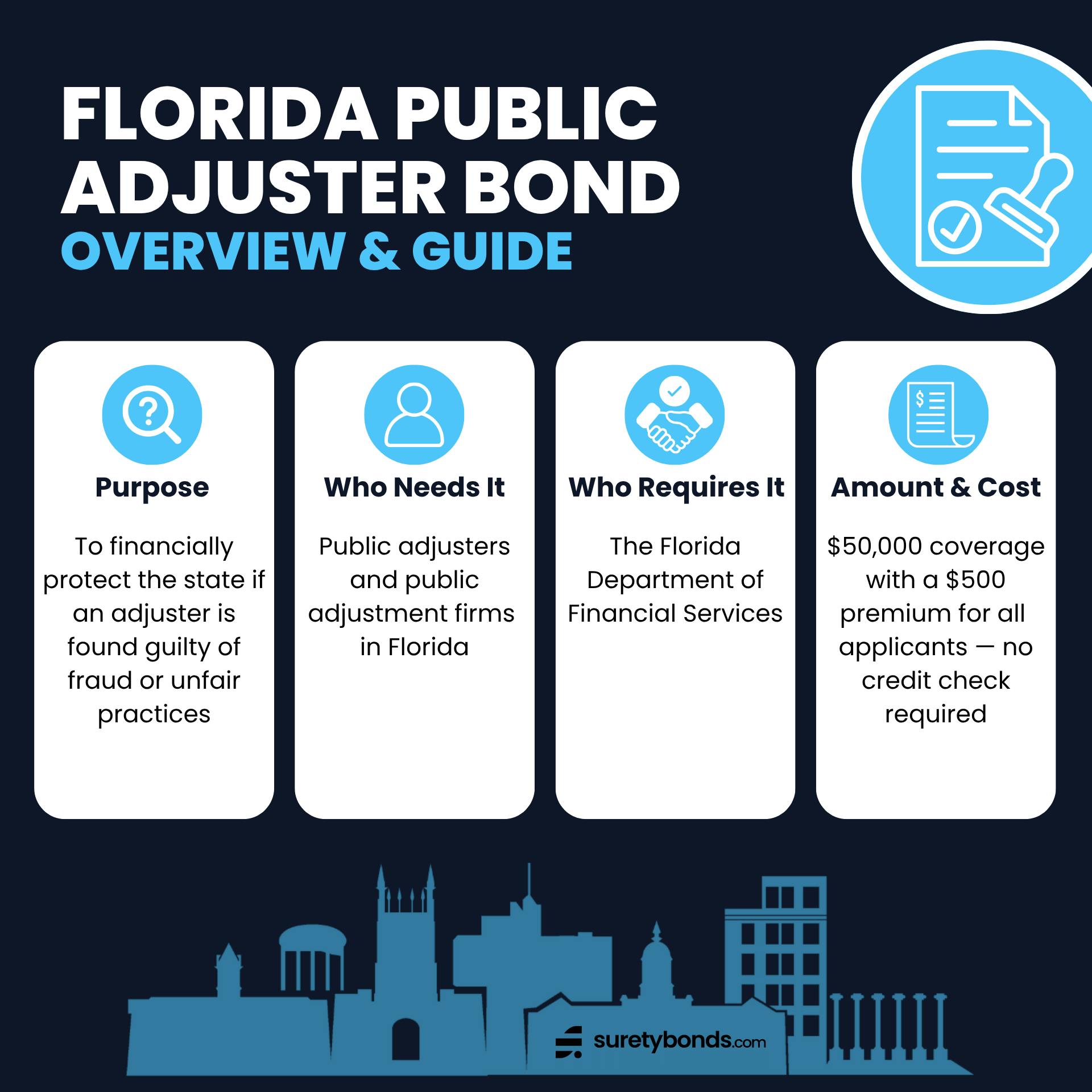
- Purpose: To hold adjusters financially liable for fraud or unfair practices
- Who Needs It: All public adjusters working in Florida
- Regulating Body: The Florida Department of Financial Services
- Bond Amount: $50,000
- Price: $500 for a 1-year term
All public adjusters in Florida need a $50,000 surety bond. Read on to learn all about this requirement and how to get one.
What Is a Florida Public Adjuster Bond?
If you’re applying for a public adjuster license in Florida, the Department of Financial Services (FLDFS) requires you to file a $50,000 surety bond. A public adjuster bond protects both the state and your clients from fraudulent or negligent practices.
How Much Do Public Adjuster Bonds Cost in Florida?
Florida public adjuster bonds cost a flat rate of $500 annually for the required $50,000 coverage.
You can also save 25% by selecting a multi-year term at checkout. Click below to buy your bond in minutes.
SuretyBonds.com offers the lowest available rates from our nationwide provider network with no added fees.
How Does a Florida Public Adjuster Bond Work?
A Florida public adjuster bond creates a legally binding contract between three parties: the principal, obligee and surety provider.
| Bond Party | Description |
|---|---|
| 1. Principal | The public adjuster filing the bond |
| 2. Obligee | The Florida Department of Financial Services requiring the bond |
| 3. Surety | The surety provider issuing the bond |
By purchasing this bond, you agree to uphold Florida Statutes Chapter 626, Part VI. State law prohibits the following adjusting practices:
- Misusing, taking or withholding funds
- Making false insurance claims
- Giving clients incorrect or deceptive claim information
Committing these acts could result in bond claims. The surety will pay valid claims up to the full $50,000 bond amount. However, you ultimately must refund the surety.
How Do I Get a Public Adjuster Bond in Florida?
With SuretyBonds.com, you can buy your public adjuster bond online 24/7.
The whole bonding process takes just a few minutes. Simply enter your name, address and license number (if available) into our secure online portal. Once we process your payment, we’ll email your official bond form directly to you.
Remember to file the bond with the FLDFS as instructed.
Can I Get Bonded With Bad Credit?
Yes, this bond doesn’t require a credit check! Everyone qualifies for the same flat rate, regardless of credit score.
How Do I Renew My Public Adjuster Bond?
Florida public adjuster bonds expire annually. We’ll begin sending you reminders by phone and email 90 days before the expiration date.
To extend your bond term another year, simply pay the attached invoice.
Can I Make Changes to My Bond?
Yes, you can often make minor changes, such as name and address, by contacting your surety company.
If you purchased your bond from us, email [email protected] with the updated information.
How to Become a Public Adjuster in Florida
All residents and nonresidents must complete the following steps to apply for a Florida public adjuster license:
- Complete Prerequisites: You must complete 6 months of qualifying employment in Florida or your home state.
- Submit Fingerprints: Register for a LiveScan fingerprinting appointment and pay the $49.50 fee.
- Buy a Bond: Purchase the required $50,000 surety bond.
- Apply: Complete the application on the MyProfile online portal and pay the $55 fee.
- Pass the Exam: Once your application is approved, you’ll receive an email with instructions for how to register for the public adjuster exam. Pay the $44 and take the exam.
Once your exam score is verified, you can print your adjuster license from MyProfile. As the final step, you’ll need to pay a $60 appointment fee to activate your license.
Do I Need to Complete Continuing Education?
All public adjusters must complete 24 hours of approved continuing education every 2 years by the last day of their birth month. You can find your CE records in your MyProfile account.
For more information on the Florida public adjuster licensing and bonding process, watch the video below.