Indiana Collection Agency Bond Overview
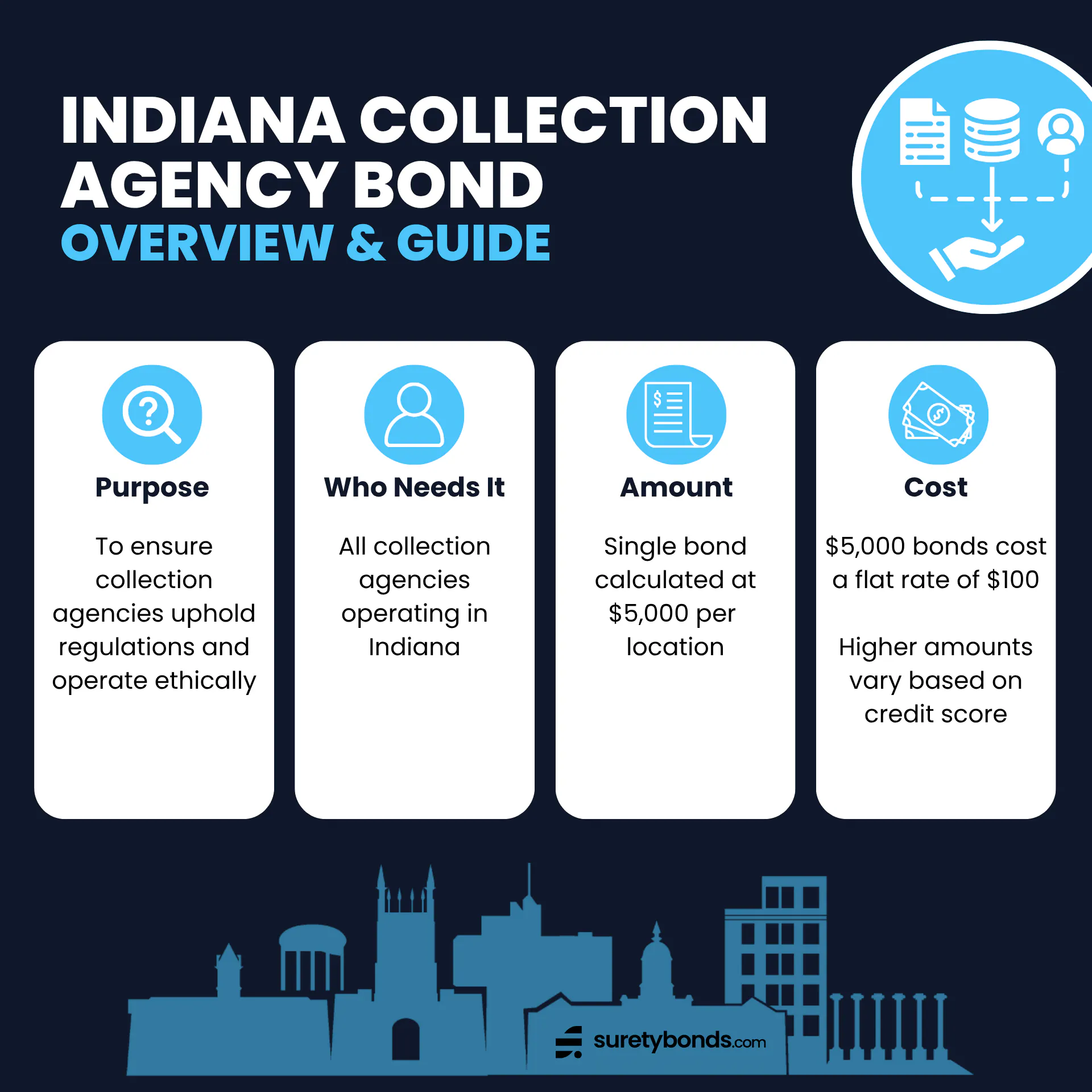
- Purpose: To ensure collection agencies uphold regulations and operate ethically
- Who Needs It: All collection agencies operating in Indiana
- Regulating Body: The Indiana Secretary of State — Securities Division
- Bond Amount: $5,000 per location
- Minimum Price: $100 for a one-year term
What Is an Indiana Collection Agency Bond?
An Indiana collection agency bond protects the public from unethical debt collection practices.
The Indiana Secretary of State, Securities Division, requires a single bond calculated at $5,000 per in-state location.
How Much Do Collection Agency Bonds Cost in Indiana?
The $5,000 Indiana collection agency bond costs a flat rate of $100. You can select a longer term of up to three years to save 25%.
For higher coverage amounts, we’ll run a soft credit check to determine your exact price. Click below to start the bonding process today!
SuretyBonds.com offers the lowest available rates from our nationwide provider network with no added fees.
How Does an Indiana Collection Agency Bond Work?
An Indiana collection agency bond is a legal contract between these three parties.
| Bond Party | Description |
|---|---|
| Principal | The collection agency owner filing the bond |
| Obligee | The Indiana Secretary of State — Securities Division requiring the bond |
| Surety | The issuing surety provider |
This bond acts as a financial safeguard if you commit any harmful debt collection acts. Those affected can file claims against your bond, which the surety will validate and pay. It’s then your responsibility to refund the surety.
What Is the Debt Collection Law in Indiana?
Collection agencies are regulated by Indiana Code 25-11, which prohibits the following practices:
- Failing to remit collected funds to clients within 60 days
- Operating a branch office without approval
- Failing to meet required disclosures
- Maintaining inaccurate records
- Mishandling client funds
These acts are common reasons for bond claims.
How Do I Get a Collection Agency Bond in Indiana?
Get your bond in just five minutes with our secure online portal. Simply enter your information into the form on this page. Once we process your payment, we’ll upload the electronic bond form to NMLS on your behalf.
How Do I File My Bond?
Once we upload your bond form to NMLS, you’ll need to grant authority to the surety company. When you log in to NMLS, enter the surety’s name or identifier (NAIC/NPN) as found on your bond follow-up email. The obligee can’t accept your bond until you authorize the surety.
Can I Get Bonded With Bad Credit?
Yes, the minimum $5,000 bond doesn’t require a credit check! For higher amounts, we approve 99% of applicants through our bad credit bonding program. Apply for a free quote today.
How Do I Renew My Collection Agency Bond?
Indiana collection agency bonds expire annually. We’ll send you text and email reminders starting 90 days before expiration. Simply pay the attached invoice to extend your bond for another term.
How Do I Update My Bond Information?
You can update your bond form by contacting your surety company. If you purchased your bond from us, email [email protected] with the needed change.
How to Get a Collection Agency License in Indiana
The Indiana Secretary of State, Securities Division, licenses all state collection agencies. To apply, follow these steps:
- Register your business with the Indiana Secretary of State.
- Purchase a $5,000 surety bond.
- Complete the application online through NMLS and pay the $100 filing fee.
Once approved, be sure to renew your license annually by January 1.
Can I Open Branch Locations?
Yes, but you must complete a branch location application through NMLS for each one. You’ll also need a separate $5,000 surety bond per location. Each branch office license costs $30.
How Long Until Debt Becomes Uncollectible in Indiana?
In Indiana, the statute of limitations for debt is 6 years for open accounts and 10 years for written contracts. You cannot sue a debtor once the debt is “time-barred,” but you can still contact them for voluntary repayment.