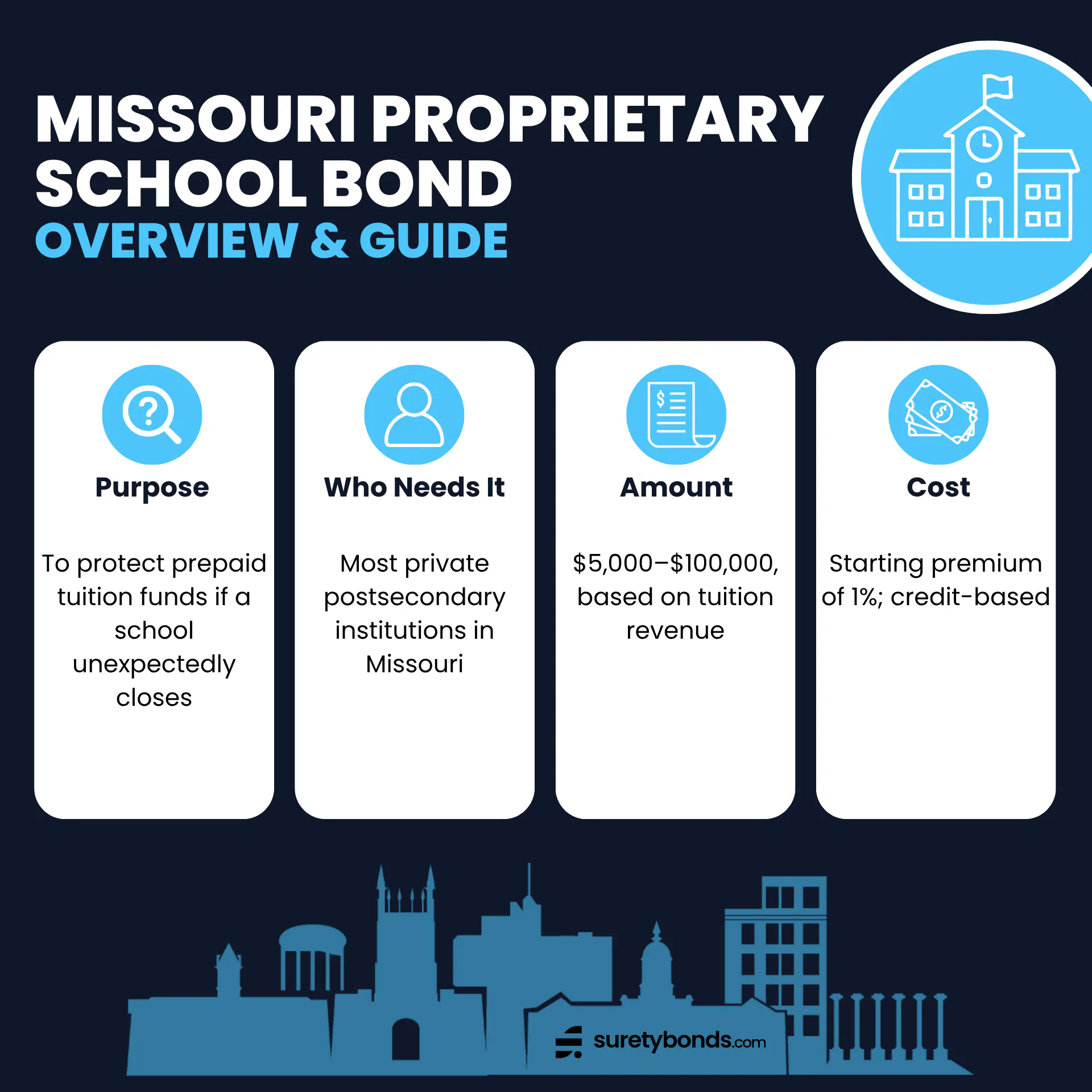
Missouri Proprietary School Bond Overview
- Purpose: To protect prepaid tuition funds if a school unexpectedly closes
- Who Needs It: Most private postsecondary institutions in Missouri
- Regulating Body: The Missouri Coordinating Board for Higher Education (CBHE)
- Bond Amount: $5,000–$100,000, based on tuition revenue
- Minimum Price: $50, credit–based
What Is a Missouri Proprietary School Bond?
A Missouri proprietary school bond protects prepaid student tuition if the school closes or fails to provide a required refund.
If you plan to operate a postsecondary education or career training program in Missouri, you’ll likely need a proprietary school certification and a surety bond.
Bond Coverage Requirements for Missouri Proprietary Schools
The Missouri Coordinating Board for Higher Education requires schools to file a financial security before getting certified. This can be in any of the following forms:
- Surety bond
- Certificate of deposit
- Letter of irrevocable credit
The amount must be equal to 10% of your expected tuition revenue during the first year, with a minimum of $5,000 and a maximum of $100,000.
Note: Do not purchase a surety bond until the CBHE has approved your proprietary school application.
How Much Do Proprietary School Bonds Cost in Missouri?
Missouri proprietary school bonds start at 1% of the coverage amount. For example, qualified applicants often pay just $100 for a $10,000 bond.
Your exact price will depend on your bond amount and credit score. Apply now!
SuretyBonds.com offers the lowest available rates from our nationwide provider network with no added fees.
How Does a Missouri Proprietary School Bond Work?
When you purchase a proprietary school bond, you enter into a three-party agreement.
| Bond Party | Description |
|---|---|
| Principal | The proprietary school owner |
| Obligee | The Missouri Coordinating Board for Higher Education |
| Surety | The issuing surety provider |
If you break state law, harmed parties can file bond claims. The surety will validate any claims and pay them up to your full bond amount. However, you’re responsible for reimbursement.
How Do I Get Bonded?
Once you know your required coverage amount, fill out the quote request form. We’ll be in touch within one business day!
Once you pay for your bond, we’ll mail the official form directly to you. Be sure to sign and file it with the CBHE.
How Fast Can I Get My Bond?
At checkout, you can select from overnight, two-day or three-day shipping. Rates are $20–$40, respectively.
Can I Get Bonded With Bad Credit?
You might still be able to get bonded with bad credit, but you’ll likely pay a higher premium. Apply today for a free, no-obligation quote to see how credit impacts your cost.
How Do I Renew My Bond?
Missouri proprietary school bonds expire annually. We’ll send you reminders starting 90 days before renewal. Just pay the premium to extend your bond for another term.
Can I Make Changes to My Bond?
Only your surety company can make changes to your bond form. Email [email protected], and we’ll take care of any updates by issuing a bond rider or new form.
How to Get a Proprietary School Certification in Missouri
To open a proprietary school in Missouri, you’ll need to apply for certification from the CBHE. Follow these steps:
- Register with the Secretary of State and the Department of Revenue.
- Complete the proprietary school certification survey. This will determine if you need certification or are exempt. Once submitted, the CBHE will send you further instructions.
- Complete the application form and pay the $660 fee.
- File a security deposit, such as a surety bond, in the required amount.
It may take up to several months for your application to be processed. You cannot begin operating until certified.
To stay compliant, be sure to file a recertification application every year. The renewal window closes March 15.
Can I Open a College Without Accreditation?
No, even if your school is certified. Missouri doesn’t allow an unaccredited school to use “college” or “university” in its name. Accreditation is separate from state certification and is handled by organizations recognized by the U.S. Department of Education, such as the Higher Learning Commission.