South Carolina Money Transmitter Bond Overview
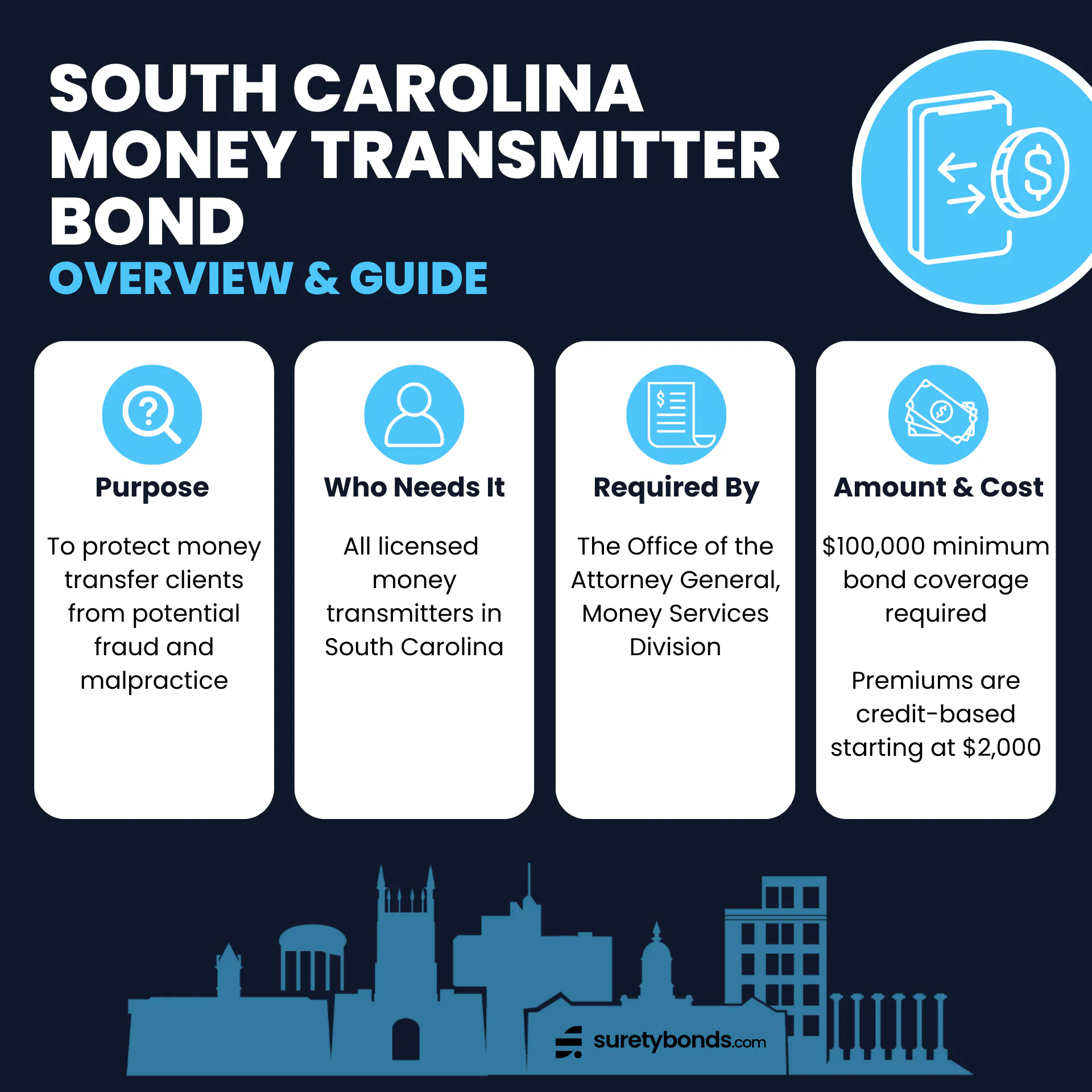
- Purpose: To protect money transfer clients from potential fraud and malpractice
- Who Needs It: All licensed money transmitters in South Carolina
- Regulating Body: The Office of the Attorney General, Money Services Division
- Bond Amount: $100,000 or average daily liability
- Minimum Price: $2,000 or 2%
What Are South Carolina Money Transmitter Bonds?
South Carolina money transmitter bonds are required to ensure money services businesses follow regulations of the Money Transmission Modernization Act.
This type of license surety bond serves as a financial guarantee to protect clients from money transmission fraud or improper reporting.
Who Needs a Money Transmitter Bond?
Money transmitter bonds are required of South Carolina businesses that sell or issue payment instruments or receive compensation for money transmissions.
The bond ensures money transmitters in South Carolina adhere to the state’s Anti-Money Laundering Act and protects consumers if they do not abide by the law.
Bond Coverage Requirements for South Carolina Money Transmitters
The Office of the Attorney General requires a minimum $100,000 surety bond for all money transmitters. If your average daily money transmission liability exceeds $100,000, your bond amount will need to increase to match the average value for the past quarter up to a $500,000 maximum.
How Much Do Money Transmitter Bonds Cost in South Carolina?
You’ll only pay a small premium of the total bond coverage amount. The base $100,000 South Carolina money transmitter bond starts at 2%, or $2,000, for applicants with excellent credit.
Apply now to get a free, personalized quote. Rates vary based on financial risk. Underwriters will run a soft credit check and may request financial statements to determine your quote.
SuretyBonds.com offers the lowest available rates from our nationwide provider network with no added fees.
How Does a South Carolina Money Transmitter Bond Work?
When you file a money transmitter bond, you enter into a legally-binding contract with a surety company and the obligee.
| Bond Party | Description |
|---|---|
| 1. Principal | The money transmission entity owner(s) filing the bond |
| 2. Obligee | The SC Office of the Attorney General, Money Services Division |
| 3. Surety | The issuing surety provider |
The Office of the Attorney General is called the obligee, because you are required to uphold an obligation to it as the bond principal.
As the principal, your obligation is backed by the surety provider. They will pay out bond claims up to the full coverage amount, but then you have to repay the surety.
How Do I Get a Money Transmitter Bond in South Carolina?
To get a South Carolina money transmitter bond, follow these steps:
- Apply for a quote from a surety agency
- Submit any information requested by underwriters
- Sign documents and pay for your invoice
- Authorize the bond once the surety has uploaded it to NMLS
The surety will upload your electronic surety bond directly to the Nationwide Multistate Licensing System (NMLS). To become officially bonded, log in to your NMLS profile and authorize the surety provider to file on your behalf.
How Fast Can I Get My Bond?
With strong credit, you can get a quote as quickly as same-day with SuretyBonds.com. Once you receive your quote, you can purchase online any time.
How Do I Renew My Money Transmitter Bond?
You’ll renew your surety bond every year as long as you maintain an active money transmission license in South Carolina.
Just pay your renewal invoice when prompted to extend your coverage for another year. If you’ve added locations and need a larger bond amount, contact your surety provider to coordinate this change.
How to Get a Money Transmission License in South Carolina
The South Carolina Office of the Attorney General oversees money transmitter licensing, but you’ll apply online through the NMLS portal.
Gather the following materials to submit along with your surety bond:
- Completed MU1 and MU2 forms with all applicable documents attached in the Document Uploads section
- Credit report for all control persons
- Criminal background check for all control persons
Note: There is a separate South Carolina Currency Exchange License.